

Spruce trees take decades to mature. Genomics is helping forest breeders make better decisions much earlier by identifying which trees may be better equipped to withstand pests, drought and other pressures, before those traits become visible in the forest.
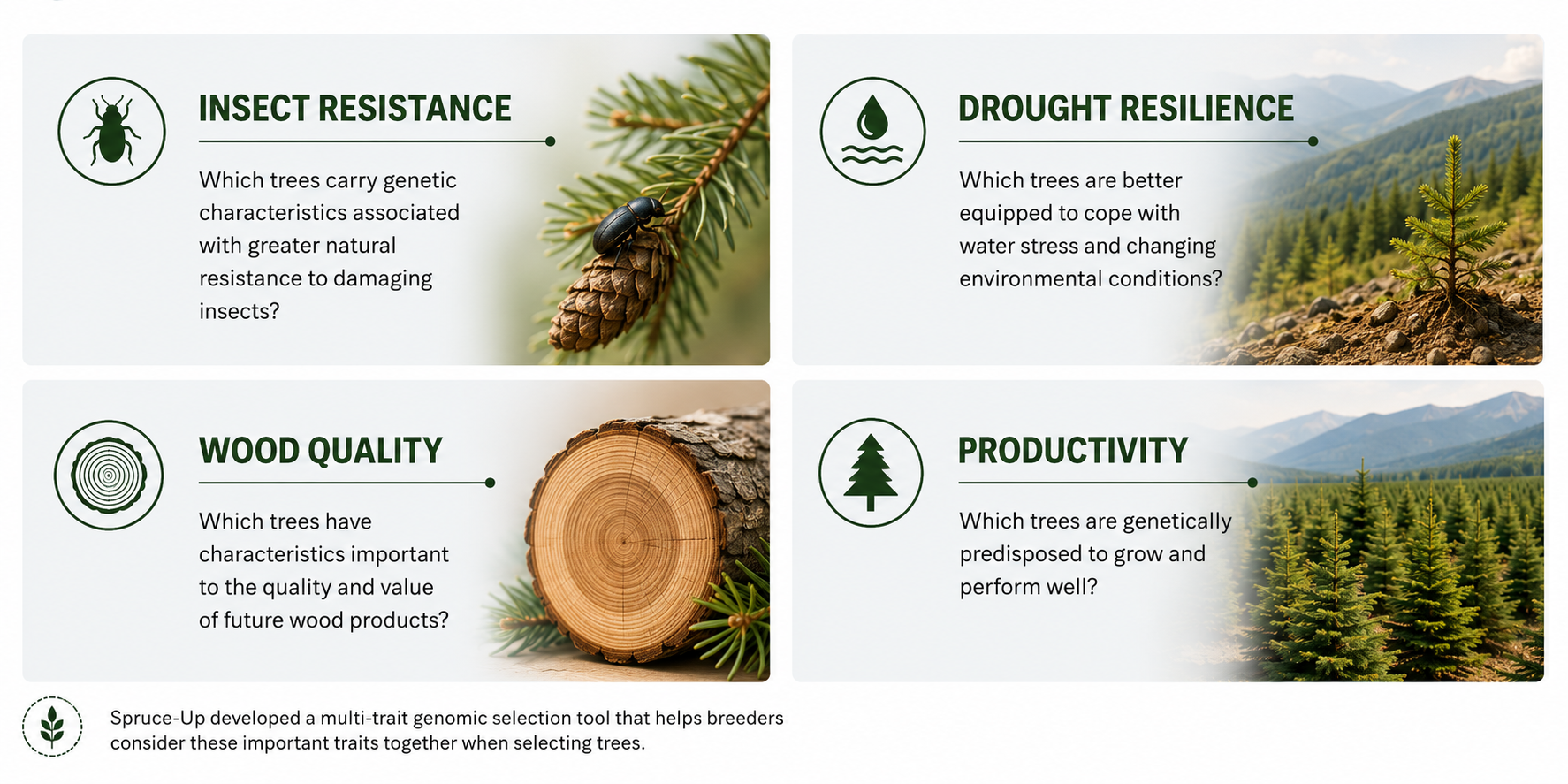
The Genome BC supported Spruce Up project brought together researchers and forest-sector professionals to develop genomic tools that would accelerate conventional spruce breeding by helping tree breeders determine several important traits at once: pest resistance, drought resistance, wood quality and productivity. [1]
Trimming decades off the tree breeding process
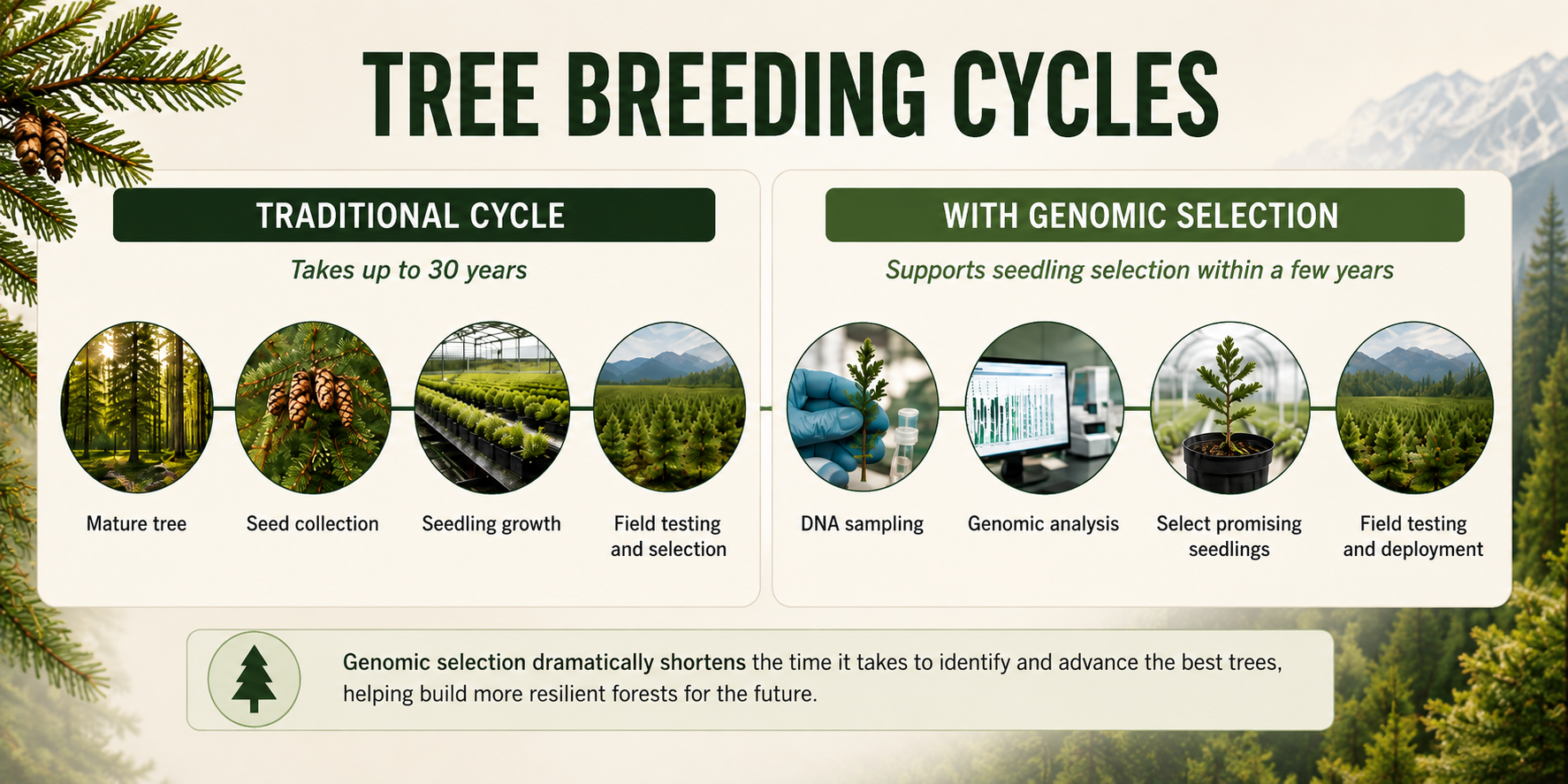
Traditional tree breeding relies heavily on phenotypes; the characteristics that become visible as a tree grows. In conventional spruce breeding, trees are evaluated in the field for up to 30 years.[2] Genomic selection offers another route. By reading a young tree’s DNA, breeders can predict how well it will perform against the traits identified above, without waiting years to see it grow. Proof-of-concept work that preceded Spruce Up showed that genomic selection could reduce the time needed to complete a spruce breeding cycle by about two-thirds. [2]
Selecting for more than one trait
Spruce Up integrated genomic information associated with pest resistance, drought resistance, wood quality and productivity into a multi-trait genomic selection tool. This allows breeders to assess several characteristics together when deciding which seedlings should advance in a breeding program. [1]
The use of genomics does not replace field trials, but it gives breeders another layer of evidence much earlier, helping them decide which candidates are most promising before committing years to further evaluation.
Building natural defences
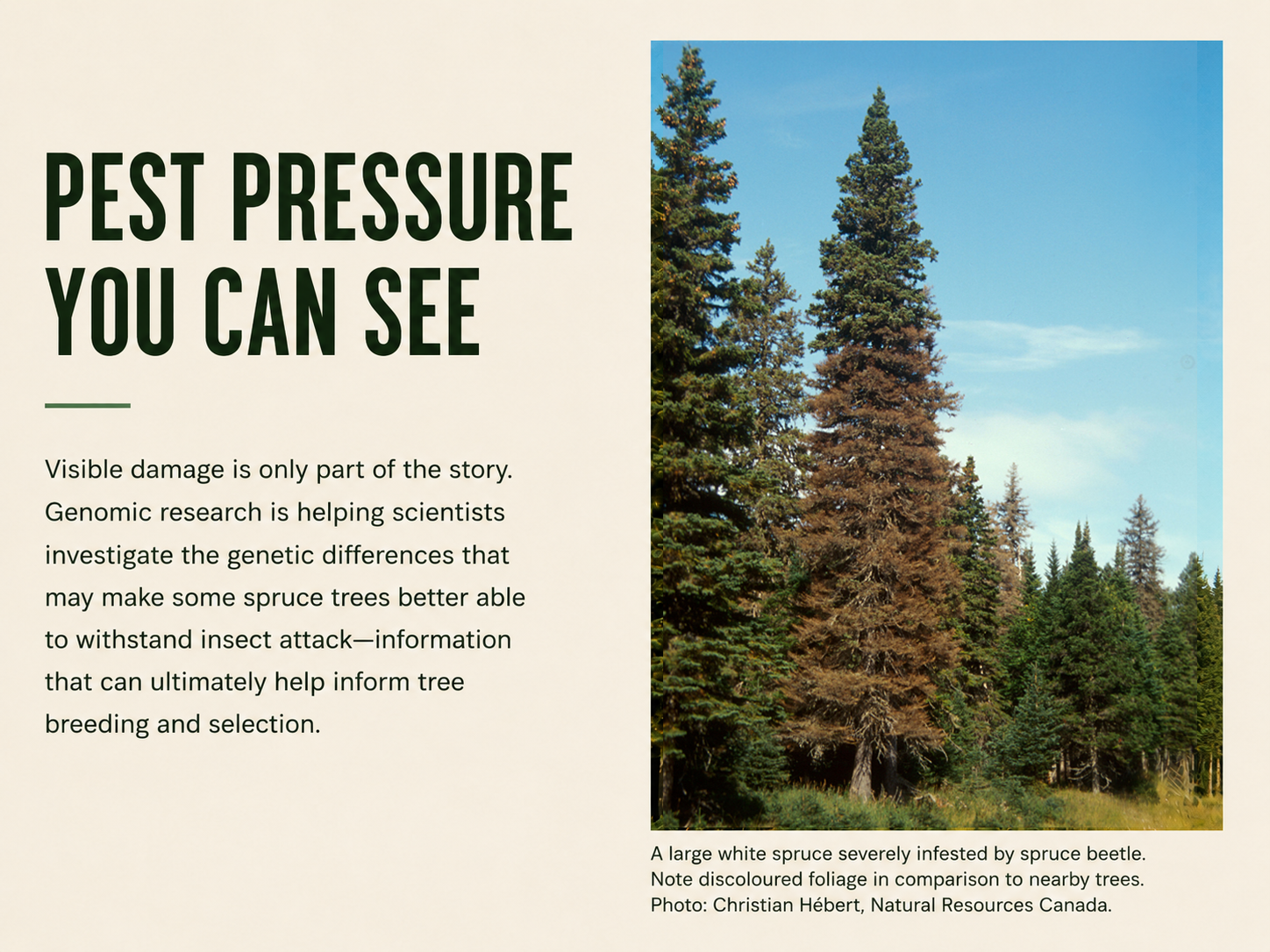
Spruce Up sits within a longer continuum of forest genomics research examining how conifers respond to biological threats. Earlier work led by Dr. Jörg Bohlmann, a professor at the University of British Columbia, studied how interior spruce responds to two different threats: infection by Leptographium abietinum, a fungus associated with spruce beetles, and feeding by white pine weevils. [3]
Researchers found that both threats activated genes involved in the tree’s natural defence system, including genes encoding enzymes used to defend against insects and fungal pathogens.[3,6]
That broader body of work helps explain why some trees cope better with insect and disease causing organisms than others. Spruce Up identified genes linked to insect resistance and used that information to develop biomarkers tree breeders can use to identify more resistant trees. [1]
From research toward tree breeding
Spruce Up was designed with implementation in mind. Its participating end users included the BC Ministry of Forests, Natural Resources Canada, the Canadian Wood Fibre Centre and other forest-sector organizations involved in tree improvement and reforestation. [4]
This matters because genomic selection is most useful when it integrates directly with established breeding programs. Spruce Up’s project design explicitly focused on developing and implementing genomic selection systems to shorten breeding cycles, reduce costs and give breeders more flexibility to respond to changing environmental conditions. [2]
A genome built on a very large scale
There is another reason this work is technically demanding: spruce genomes are enormous. Spruce Up produced genome sequences for Sitka and Engelmann spruce and improved assemblies for white and interior spruce. Each genome is roughly 20 billion DNA bases, about seven times larger than the human genome. [5]
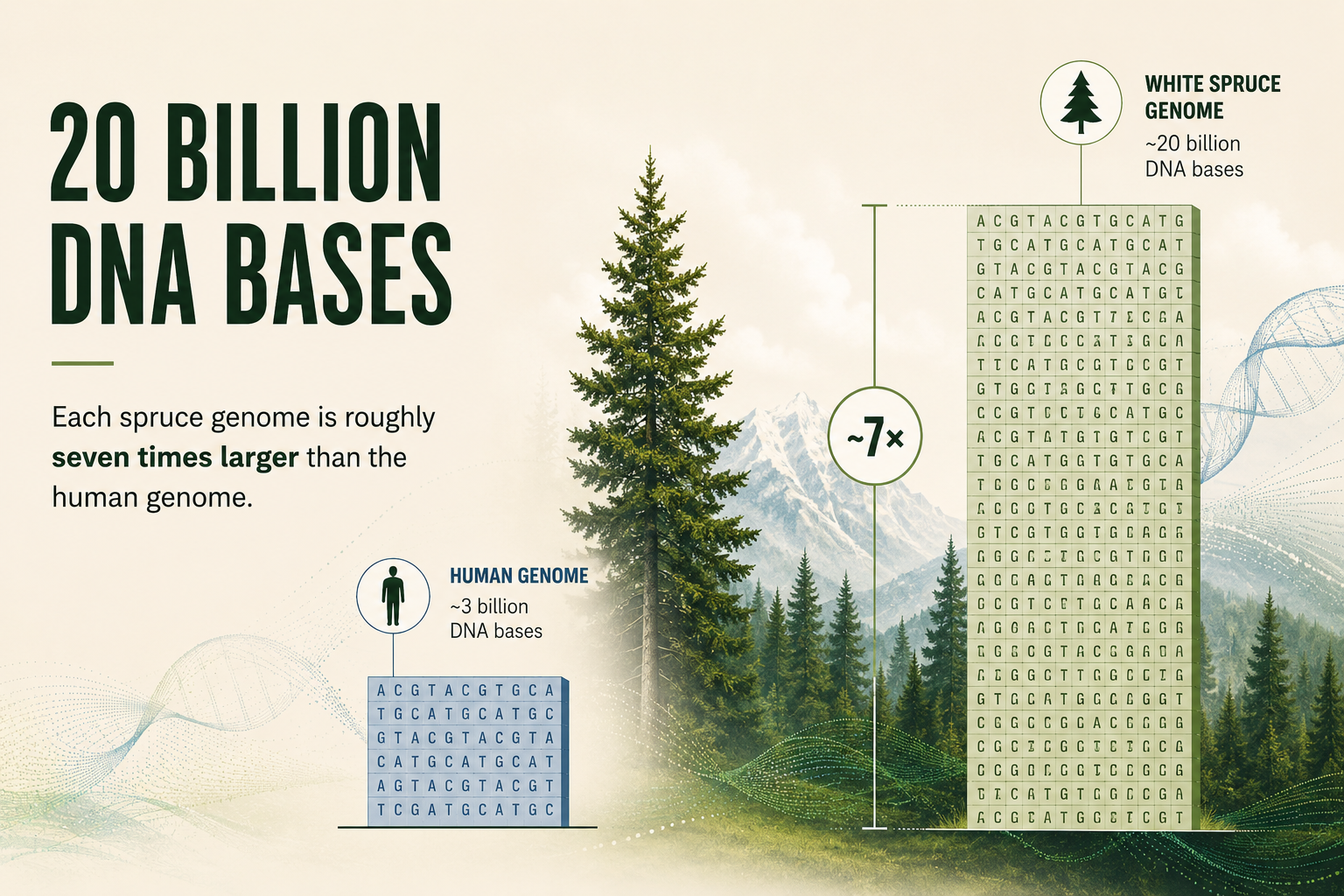
These reference genomes are part of the foundation that enables researchers to link differences in DNA to differences observed in trees, breeding trials and natural populations. [5]
Explore further
Explore Spruce Up — Project overview, activities and genomic-selection resources. Open source
How Spruce Up advanced genomic selection — Genome BC’s completed-project summary of the multi-trait genomic screening tool and project outcomes. Open source
The genomes of four North American spruce trees — Genome Sciences Centre overview of the Spruce Up genome-sequencing work. Open source
Sources
[1] Genome BC: Spruce Up: Advanced spruce genomics for productive and resilient forests https://www.genomebc.ca/projects/Spruce Up-advanced-spruce-genomics-for-productive-and-resilient-forests/
[2] Spruce Up: Wood Quality and Productivity https://Spruce Up.ca/en/wood-quality/
[3] UBC Graduate School / Bohlmann research record: Transcriptome analysis of conifer defence against blue-stain fungi and white pine weevil; related peer-reviewed chitinase study https://www.grad.ubc.ca/researcher/14000-bohlmann
[4] Spruce Up: Overview https://Spruce Up.ca/en/outline/
[5] Canada’s Michael Smith Genome Sciences Centre: The genomes of four spruce trees native to North America https://www.bcgsc.ca/news/genomes-four-spruce-trees-native-north-america
[6] Kolosova et al: “Cloning and characterization of chitinases from interior spruce and lodgepole pine.” Phytochemistry (2014). https://pubmed.ncbi.nlm.nih.gov/24564978/
