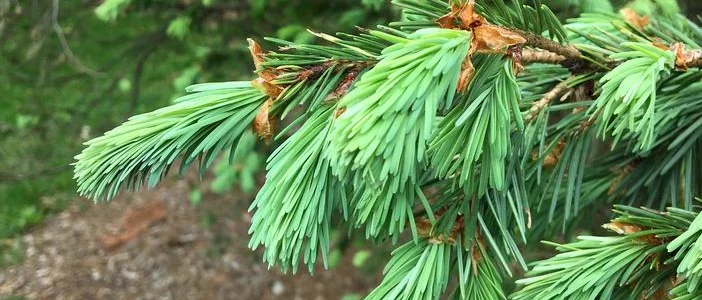
If you’ve spent time in British Columbia’s lush forests, you’ve almost certainly encountered a Douglas-fir. These towering giants are among the province’s most recognizable trees, providing habitat for wildlife, supporting local economies and helping define BC’s landscape.
But as the climate changes, these iconic trees face new challenges.
Researchers are using genomics to better understand how Douglas-fir from different regions of BC are responding to drought and other environmental stresses, with the goal of helping forests remain healthy and resilient for generations to come.
Taking a Peek into Its DNA
Despite the importance of Douglas-fir to BC’s forests and economy, scientists still know surprisingly little about the underlying genetics that drive climate resilience between coastal and interior populations. Even though there are big differences in their genetics and how they’re managed, forest geneticists still depend on the reference genome developed for the Coastal Douglas-fir.
Part of the challenge is that the Douglas-fir genome is 5 to 7 times larger and more complex than a human genome, making it more difficult and expensive to study.
A Genome BC funded project is developing new genetic resources for the Interior population, so researchers can develop new cost-effective genomic tools to compare the two varieties more efficiently.
Searching for Clues to Drought Tolerance
One of the key goals is to identify the genetic basis of drought tolerance.
Led by Dr. Tom Booker at the University of British Columbia in partnership with Dr. Trevor Doerksen at the BC Ministry of Forests, the project is developing new ways to process large numbers of DNA samples at once, dramatically reducing the cost of genomic research.
Using this new tool, the team will compare genomes of trees that survived under dry conditions against those that struggled. The genetic differences can be used as markers to identify trees with better survival under water shortages.
These insights could help forest managers select and grow trees that are better adapted to future conditions.
Benefits Beyond Douglas-fir
As climate change continues to reshape ecosystems, tools like genomics are giving scientists new ways to understand how species adapt and how we can help forests remain healthy, productive and resilient in the decades ahead.
Genome BC is proud to partner with BC Ministry of Forests to advance new genomics-enabled tools for climate adaptation in BC.